先把时间表读对
官方季节指南把大天鹅的陕西越冬期概括为11月至次年3月,把灰鹤描述为春秋季集群过境,白鹭则常年活动。10月中旬前后适合核对开放、交通和器材,不应把季节预告写成大天鹅已经抵达某个河段。
迁徙受冷空气、水位、食物和人为干扰影响,实际首见与高峰每年不同。出发前查看林业、湿地管理和气象信息;没有最新监测时,把目标设为一般水鸟观察,不承诺数量或指定物种。
远距离怎样区分三类白灰色大鸟
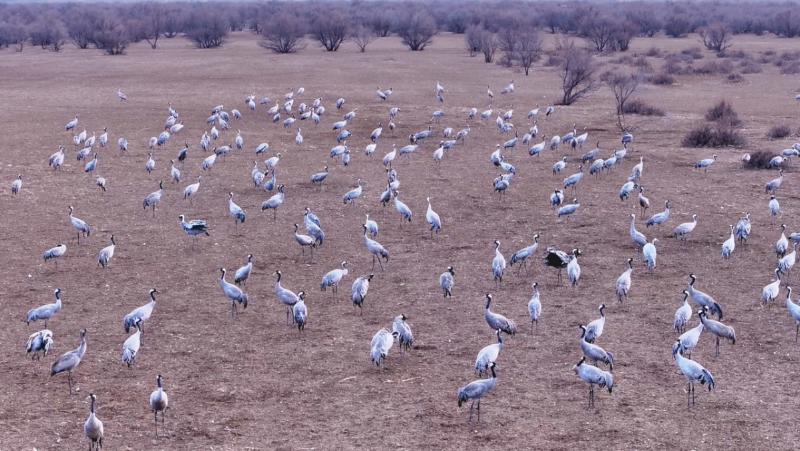
大天鹅成鸟通体白、颈长,黄黑相间的嘴部花纹是关键;灰鹤整体灰,颈腿修长,头颈有黑白与红色细节,飞行时颈部伸直。白鹭小得多、全身白,黑嘴黑腿和黄色脚趾在条件合适时有帮助。
不要只凭白色或体型下结论。幼年大天鹅偏灰,逆光会抹去嘴色,远处灰鹤也可能与其他鹤类混淆;记录叫声、队形、翼色和多张照片,看不清时保留未定。
越冬前怎样设计低干扰行程
只选择公开公园、堤岸和固定观景设施,在一个河段停留并反复扫描水面、浅滩和岸边农田,比跨城追逐社交媒体坐标更可靠。准备8至10倍双筒或单筒镜、防风保暖层和防滑鞋。
不下滩、不靠近夜栖群、不投喂、不鸣笛、不放无人机。大群水鸟集体抬头、远离岸线或惊飞时立即后退;公开清单只写保护地或市县级范围,敏感地点延迟发布并删除照片定位。
Read the calendar correctly
The official seasonal guide places Whooper Swans in Shaanxi mainly from November to March, Common Cranes on spring and autumn passage, and Little Egrets year-round. Mid-October is for checking access, transport and equipment, not claiming swans have already arrived on a particular reach.
Cold fronts, water, food and disturbance change first dates and peaks. Check forestry, wetland-management and weather information before travel. Without current monitoring, make general waterbird observation the goal and never promise a count or species.
Separating three pale or grey large birds
Adult Whooper Swan is white and long-necked, with the yellow-and-black bill pattern essential. Common Crane is mainly grey with long neck and legs and black, white and red head details, holding its neck straight in flight. Little Egret is much smaller, white, with a black bill and legs and, when visible, yellow feet.
Do not identify from whiteness or size alone. Young swans are grey, backlight erases bill colour, and distant Common Cranes may be confused with other cranes. Record calls, formation, wing pattern and multiple photographs, leaving an unresolved bird unidentified.
Designing a low-impact pre-winter visit
Choose public parks, embankments and fixed viewpoints. Staying on one river section and repeatedly scanning water, shallows and adjacent fields is more reliable than crossing cities for social-media pins. Carry 8–10× binoculars or a scope, windproof layers and grippy shoes.
Do not enter flats, approach roosts, feed, honk or fly a drone. Retreat if a large flock raises heads together, moves offshore or flushes. Public lists should use reserve, city or county-level locality; delay sensitive records and remove image coordinates.