把数字读成一次监测快照
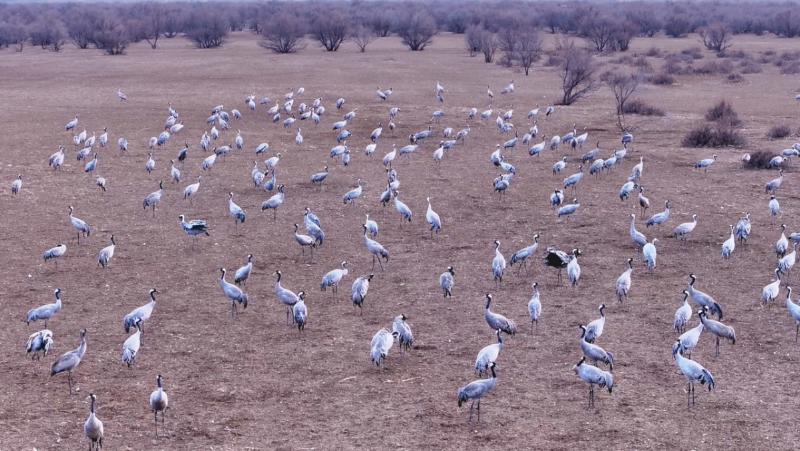
10月12日监测记录包括34只灰鹤、9只大天鹅、5只小天鹅,鸿雁和豆雁分别40余只;库区约2000只鸭以绿头鸭为主,并有针尾鸭、普通秋沙鸭、赤麻鸭和罗纹鸭。数字来自特定时段,不能相加为每天固定鸟量。
来源称现阶段不少个体以家庭为单位,包括幼鸟和亚成鸟。家庭群分散进入农田或芦苇后可被遮挡,现场应接受漏计和区间估计,不为凑整追鸟或惊飞。
大型水鸟先按轮廓分组
灰鹤站立时颈腿修长、体色灰,飞行时颈向前伸直;天鹅体形厚重、长颈和白色体羽醒目。大天鹅与小天鹅需结合嘴部黄黑比例、体形和同行个体,距离不足时统一记为天鹅属未定。
鸿雁嘴长、颈线修长,豆雁类通常更敦实;秋季幼鸟和远距离逆光都会弱化特征。先拍整体与同行关系,再记录体形、嘴形、颈线和飞行队形,不用单一颜色下结论。
怎样避免重复计数与干扰
固定一个观察扇面,把鹤、天鹅和雁分别以5只或10只为一组计数,记录进入和离开方向、起止时间与可能重复的群。鸭群可先估算一个小块,再按面积倍增,并给出范围而非伪精确数字。
来源建议至少保持50米,实际还应随鸟的反应继续加大距离。只在合法观察点停车,不进入收获中的农田,不鸣笛、不用无人机、不沿岸追车;公开记录保留到水库级范围。
Treat the figures as one monitoring snapshot
The October 12 count included 34 Common Cranes, nine Whooper Swans, five Tundra Swans and more than 40 each of Swan Goose and Bean Goose. Roughly 2,000 ducks were mainly Mallards, with Northern Pintail, Common Merganser, Ruddy Shelduck and Falcated Duck also noted. These are time-bound observations, not a fixed daily total.
The source says many birds currently travel as families, including juveniles and immatures. Groups can disappear into fields or reeds, so accept missed birds and count ranges. Never flush or pursue them to produce a neat total.
Sort large waterbirds by silhouette first
Common Crane stands tall and grey with long legs and flies with the neck extended. Swans are heavier, long-necked and white. Whooper and Tundra Swans require bill pattern, structure and companions; at insufficient range, record an unidentified Cygnus swan.
Swan Goose has a long bill and slim neck line, while Bean Goose is usually more compact. Juveniles and autumn backlight soften distinctions. Photograph the whole bird and flock context, then note body, bill, neck and flight formation rather than relying on colour alone.
Prevent duplicate counts and disturbance
Fix one viewing sector and count cranes, swans and geese in blocks of five or ten. Log entry and exit direction, start and end time, and possible repeats. For ducks, estimate a small block and scale across the flock, reporting a range instead of false precision.
The source recommends at least 50 metres; increase that distance whenever behaviour calls for it. Park only at legal viewpoints, stay out of crops, and do not honk, fly drones or drive along the shore after birds. Publish only reservoir-level locality.