2630只是什么数字
国家林草局9月18日报道,2021年启动、实施5年的迁飞路线候鸟保护网络项目完成终期评估。大山包是全国4个示范点中唯一的内陆示范点,项目聚焦黑颈鹤保护,并推动保护管理、社区共管、宣传教育和绿色发展。
报道所说“种群峰值达2630只”是项目实施成效中的峰值指标,不是9月18日现场数量,也不等于游客某一天可以看到2630只。冬候鸟到达与集中受天气、迁徙进程和栖息地条件影响,临行前必须查看保护区最新开放与监测信息。
远距离识别黑颈鹤
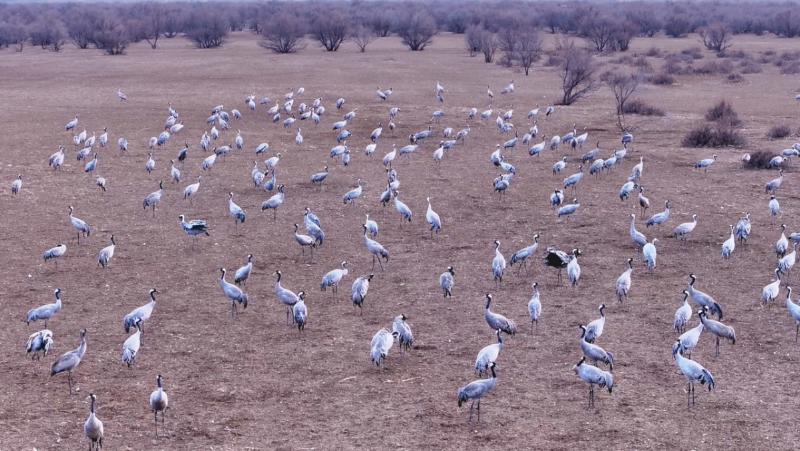
黑颈鹤成鸟头顶有红色裸皮,头颈大部黑色,身体灰白,飞行时颈和腿伸直。远距离或逆光下红色可能完全不可见,应综合长颈长腿、黑颈与灰白体色判断;幼鸟头颈偏褐,不要只用成鸟特征排除。
鹤群中个体会警戒、取食和休息。成群抬头、集体远离或鸣叫频率突然增加,通常说明观察者造成压力。使用单筒望远镜比继续靠近更有效,也不要用叫声回放让鸟抬头。
社区共管意味着游客也有责任
大山包项目特别肯定社区共管。游客应使用正式道路、观景设施和当地合规服务,不跨越农牧地、不占用村民生产通道,不要求司机绕入未开放小路。高原冬季还需准备防寒、防风、防滑和高反应对。
不追逐飞起的鹤群、不放无人机、不投喂,不公开夜栖水域和稳定觅食田块的坐标。遇临时关闭、天气恶化或巡护人员限流,应接受改期;一次不完整的观察,胜过给越冬群增加额外能量消耗。
What the figure of 2,630 means
The September 18 NFGA report says the five-year flyway network project launched in 2021 has completed its terminal evaluation. Dashanbao was the only inland site among four national demonstrations, focusing on Black-necked Crane protection alongside management capacity, community co-management, education and green development.
The reported 'peak of 2,630' is a project-period peak indicator, not a count made on September 18 and not a promise that a visitor can see 2,630 birds. Arrival and concentration depend on weather, migration progress and habitat. Check the reserve's latest access and monitoring information immediately before travel.
Identifying Black-necked Cranes at distance
An adult has red bare skin on the crown, a mostly black head and neck, a grey-white body, and flies with neck and legs extended. The red can disappear at distance or in backlight, so combine structure, black neck and grey-white body. Juveniles have browner head and neck and should not be rejected for lacking full adult marks.
Within a flock, birds alternate vigilance, feeding and rest. Many heads rising together, a flock walking away or a sudden increase in calls often shows observer pressure. A spotting scope is more effective than approaching, and playback must not be used to make cranes raise their heads.
Community co-management gives visitors duties too
The project specifically recognizes community co-management. Use formal roads, viewing facilities and compliant local services; do not cross working farmland or pasture, block village access or ask a driver to enter a closed track. A winter plateau visit also requires cold, wind, ice and altitude preparation.
Do not pursue a flushed flock, fly a drone, feed cranes or publish coordinates for roost water and dependable feeding fields. Accept rescheduling when weather, closure or ranger capacity demands it. An incomplete sighting is better than adding avoidable energy costs to a wintering flock.