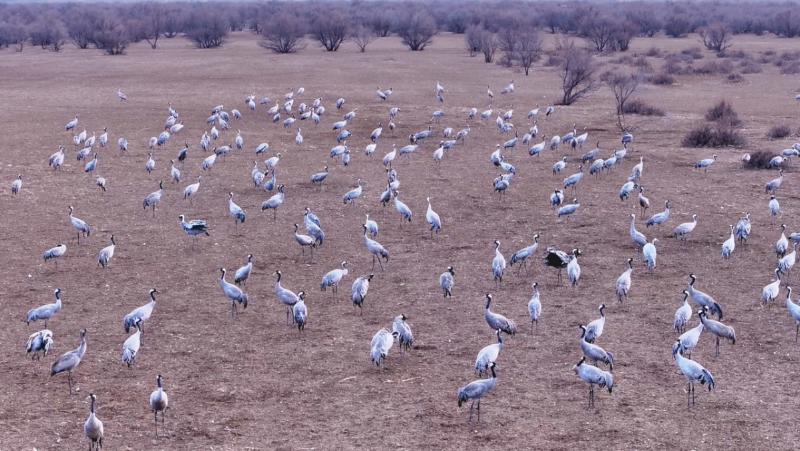
632.4万只究竟代表什么
这一数字来自2026年1月5日至15日全国同步监测,较2016年的244.3万只增长158.9%,是同一监测窗口内汇总的全国结果。它不是某个湿地的数量,也不是今年10月可即时看到的鸟数。
官方还指出我国有800多种迁徙鸟,全球9条候鸟迁飞通道中有4条经过我国,并已明确1140处重要栖息地、筛出821处关键栖息地。宏观数字适合判断保护与监测尺度,不适合承诺单次行程收获。
怎样用基线规划今冬行程
先选一处有公开开放、固定步道或观景台、近期管理公告和可靠交通的湿地,再核对水位、天气与预约。全国基线可帮助理解季节背景,真正决定一天体验的是当地最新公告和现场条件。
把期待写成生境和类群,例如开阔水面雁鸭、浅滩鸻鹬、芦苇边缘秧鸡,而不是保证青头潜鸭、东方白鹳等目标种。至少预留一个室内或城市公园备用方案。
新分布记录为什么不能当成打卡地图
官方报道列举了多地罕见水鸟与新分布,包括红胸黑雁、白眉苦恶鸟、白腰燕鸥、细嘴鸥等。这些是监测成果,不代表个体仍在原地,也不构成进入保护区核心区的许可。
公开行程只保留保护地或城市级范围,不传播精确河段、滩涂、夜栖地和实时坐标。使用望远镜从合法设施观察,不追船、不驱赶、不围堵;发现异常捕猎或受伤鸟时向管理机构定向报告。
What 6.324 million actually means
The figure is China's combined result from a synchronized survey on January 5–15, 2026, up 158.9% from 2.443 million in 2016. It is neither a count at one wetland nor a live number available to see in October.
The official report also notes more than 800 migratory bird species in China, four of the world's nine major flyways crossing the country, and 821 key habitats selected from 1,140 important sites. These national figures explain conservation scale; they cannot predict one outing.
Use the baseline to plan this winter
Choose one wetland with confirmed public access, fixed paths or hides, recent management notices and dependable transport, then check water levels, weather and booking. The national baseline supplies seasonal context; current local notices and field conditions shape the day.
Frame expectations by habitat and group—ducks on open water, shorebirds on shallows, rails at reed edges—rather than guaranteeing Baer's Pochard, Oriental Stork or another target. Keep at least one indoor or urban-park backup.
Why new distributions are not a tick-map
The report lists rare waterbirds and new distributions, including Red-breasted Goose, White-browed Crake, Bridled Tern and Slender-billed Gull. These are monitoring results. They do not mean an individual remains present or grant access to a reserve core zone.
Public itineraries should retain only reserve or city level, never a precise river reach, flat, roost or live coordinate. Watch through optics from legal facilities without boat pursuit, flushing or blocking. Report suspected hunting or injured birds privately to management.